walter veintemilla
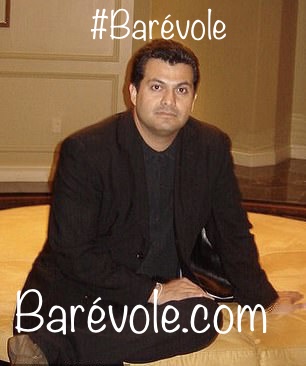
Walter Veintemilla is a South Florida financier who has been thrust into the international spotlight for his alleged role in financing the plot that led to the 2021 assassination of Haitian President Jovenel Moïse, placing an otherwise low‑profile lender at the center of a geopolitical scandal. Prosecutors say his work through a small Miramar-based financial company helped bankroll a network of security contractors and political hopefuls who envisioned reshaping Haiti’s leadership, turning what was marketed as an investment opportunity into the financial backbone of a deadly conspiracy.
From quiet lender to central figure
Before his name appeared in headlines, Veintemilla operated in relative obscurity as the principal of Worldwide Capital Lending Group, a Broward County financial services firm that combined mortgage, insurance and private lending activities under one roof. Described in records as a mid-level financier rather than a Wall Street titan, he built a business that specialized in extending credit to riskier ventures, promising investors outsized returns in exchange for accepting political and commercial uncertainty.
According to charging documents and investigative reports, that appetite for risk eventually drew him into discussions with South Florida security contractors and Haitian political aspirants who were pitching a dramatic project: backing a change of power in Haiti that, if successful, could unlock lucrative infrastructure, security and governmental contracts for those involved. In these conversations, Veintemilla was not portrayed as a foot soldier but as a potential financial engine, a man who could transform ambitious plans into funded operations by extending credit lines and arranging investor capital.
The alleged funding network to Haiti
Federal authorities allege that in early 2021 Veintemilla agreed to provide financing to a Miami-area security operation, Counter Terrorist Unit (CTU), and its associates, who were working with Haitian-American doctor and pastor Christian Emmanuel Sanon, a little-known figure with aspirations to replace President Moïse. Prosecutors say that, through Worldwide Capital Lending Group, Veintemilla offered a line of credit worth roughly $175,000 to CTU, with the understanding that a successful political transition in Port-au-Prince could yield multimillion-dollar infrastructure and security contracts for his firm and its investors.
Investigators contend that the money flowing from Veintemilla’s business helped pay for logistical support that would prove decisive on the ground, including travel, lodging and equipment for Colombian ex-soldiers who later formed the core of the commando team accused of storming the presidential residence. In one account summarized in legal and media reports, funds tied to Veintemilla were also used to support shipments of CTU-branded ballistic vests and other gear to Haiti, expanding the reach of a security operation that had begun under the guise of protecting Sanon but evolved into a force capable of destabilizing an entire nation.
The night of the assassination and shifting narratives
In the early hours of July 7, 2021, heavily armed men, many of them Colombian former soldiers, entered President Moïse’s private residence outside Port-au-Prince, fatally shooting the Haitian leader and wounding his wife in an assault that stunned the region and left the country on the brink. Haitian and U.S. investigators later alleged that the operation was the culmination of a plot that had morphed from a plan to detain the president and install a new leader into a lethal attack, a shift that prosecutors say was supported by the financial infrastructure Veintemilla helped create.
Court filings describe a clandestine vocabulary used by conspirators, who referred to ammunition as “screws and nails” and weapons as “tools,” language that U.S. authorities say cloaked discussions of orders and payments in the appearance of routine logistics. Against that backdrop, Veintemilla is accused of sending tens of thousands of dollars that investigators say were earmarked for ammunition purchases and armored vests, even as the stated goal in some documents remained a nonlethal transfer of power rather than a night of gunfire in the presidential bedroom.
Charges, defense, and legal stakes
In public filings and press briefings, U.S. prosecutors have portrayed Veintemilla as a key financial conspirator, charging him in connection with providing material support and funding that enabled the plot against a foreign head of state. They argue that without the credit line and financing arranged through his South Florida firm, the network of security contractors, political operatives and ex-soldiers would have struggled to maintain the tempo of planning and recruitment that ultimately led to Moïse’s death.
Veintemilla’s defense team has pushed back, signaling that he will plead not guilty and characterizing his role as that of a businessman misled about the true nature of the venture he was backing. His attorney has suggested in statements that he believed he was financing security and political consulting in support of a lawful transition, not underwriting an assassination, setting up a courtroom clash over what he knew, when he knew it and how far a financier’s responsibility extends once money leaves his accounts.
Wider implications for Haiti and beyond
The case against Walter Veintemilla unfolds against a backdrop of political turmoil in Haiti, where multiple judges and prosecutors linked to the Moïse investigation have faced threats, resignations and allegations of interference that have slowed the search for accountability. Human rights advocates argue that the involvement of foreign financiers and security firms underscores a deeper vulnerability in Haiti’s political system, where external money and private actors can exert outsize influence over who holds power in Port-au-Prince.
For U.S. authorities, the prosecution is part of a broader effort to signal that American soil and financial institutions cannot be used with impunity to plot violent regime change abroad, particularly against leaders of nations formally considered partners. As Veintemilla waits for his day in court, the questions circling his case—about profit, responsibility and the murky line between political consulting and criminal conspiracy—continue to reverberate far beyond the quiet offices of a Broward County lending
is under investigation by the fbi for the m funding the mercenaries who killed the president for Haiti Jovenel Moise. Mr veintemilla attorney claims that he was funding a peaceful transfer of power.
Please follow and like us: