
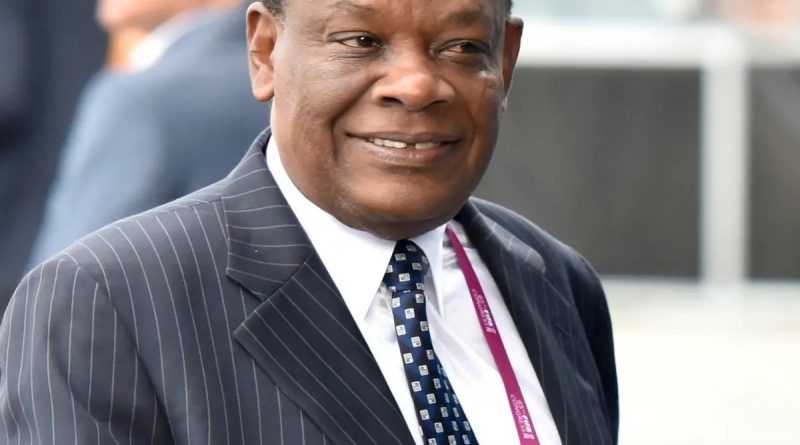
Yves Jean-Bart
Yves Jean-Bart, longtime power broker of Haitian football, rose from regional sports official to one of the country’s most influential sporting figures before sexual abuse allegations and a dramatic legal reversal turned him into a symbol of both impunity and institutional failure in global football governance. Nicknamed “Dadou,” the veteran administrator has re-emerged after a sports court annulled his lifetime ban, reopening painful questions for alleged victims and rights groups who warn that the system has failed to protect young players.
Architect of modern Haitian football
Born on 30 October 1947 in the southern town of Aquin, Jean-Bart spent decades consolidating influence inside the Fédération Haïtienne de Football (FHF), eventually becoming president in 2000. Under his watch, the federation oversaw youth, men’s and women’s national teams, and he was re-elected multiple times, including a fifth term in 2016, cementing his status as the country’s dominant football figure.
His stature grew beyond Haiti’s borders as he briefly served as acting president of the Caribbean Football Union after the suspension of regional leaders in 2011, gaining visibility in FIFA’s wider political ecosystem. Supporters credited him with securing resources and international attention for Haitian football, even as critics warned that such concentrated power, with limited oversight, created fertile ground for abuse.
Explosive abuse allegations
That power structure came under intense scrutiny in April 2020, when reporting by The Guardian and subsequent investigations by human rights groups detailed allegations that Jean-Bart had coerced young female players at Haiti’s national training center into sex, including at least one case in which a player was allegedly forced to have an abortion. Survivors and family members described a climate of fear at the Centre Technique National in Croix-des-Bouquets, saying girls’ careers, scholarships and futures were weaponized to pressure them into sexual relationships.
Human Rights Watch reported testimonies from a former women’s national team player who said contracts and opportunities abroad were conditioned on “sleeping with the president,” and that teenagers became pregnant and had children by Jean-Bart while staff and officials looked the other way. Local rights organization RNDDH called for a serious judicial investigation, while women’s groups in Haiti publicly pressed authorities to act and to guarantee the anonymity and safety of players who came forward.
FIFA ban and global backlash
As allegations mounted, FIFA’s independent Ethics Committee provisionally suspended Jean-Bart in May 2020 and later, in November 2020, imposed a lifetime ban from all football-related activities and a substantial fine after finding him responsible for a “very complex and extremely harmful system of sexual abuse and exploitation” of female players. FIFA investigators concluded that the abuse ranged from inappropriate touching to sexual harassment, rape and forced abortion, describing a pattern that turned a national training center into a site of predation rather than protection.
The decision was hailed by many advocates as a long-overdue assertion of accountability in a sport grappling with multiple abuse scandals globally. Yet even after the ban, reporting indicated that Jean-Bart continued to wield influence over Haitian football structures, underscoring the gap between formal sanctions on paper and real-world power dynamics inside national federations.
CAS annulment and contested vindication
In February 2023, the Court of Arbitration for Sport (CAS) overturned Jean-Bart’s lifetime ban, ruling that there was insufficient evidence to establish violations of FIFA’s code of ethics and effectively clearing him of the charges within the sports legal system. The CAS panel cited inconsistencies and inaccuracies in some witness statements and expressed doubts about elements of the evidence submitted by FIFA, Human Rights Watch and the global players’ union FIFPRO.
Jean-Bart responded by declaring that his “honor” had been restored after what he called “baseless, maliciously motivated smears,” framing himself as the victim of a campaign to destroy his reputation. Rights groups, however, condemned the ruling as a “travesty of justice,” arguing that procedural shortcomings and inadequate witness protections made it nearly impossible for survivors—who faced threats and feared retaliation—to safely deliver coherent testimony against a powerful figure.
Return bid and unresolved questions
Following the CAS decision, Jean-Bart moved quickly to reclaim his old role, announcing plans to resume leadership of the FHF and sparking outrage among victims’ advocates and sections of the Haitian football community. FIFPRO and Human Rights Watch warned that his return would send a chilling message to players, particularly girls and young women, who had taken enormous personal risk to report abuse and now see the alleged perpetrator reinstalled at the top of the sport’s national hierarchy.
For Haiti, still grappling with political instability and endemic violence, the Jean-Bart saga has become a test of whether powerful sports officials can be held to account in a system where domestic institutions are weak and international bodies sometimes falter. For global football, the case highlights the limits of current safeguards: a sport that officially enshrines respect for human rights and child protection now confronts the stark reality that even its most severe sanction—a lifetime ban—can be undone, leaving alleged survivors wondering where, and to whom, they can safely turn.