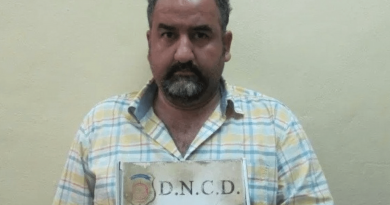
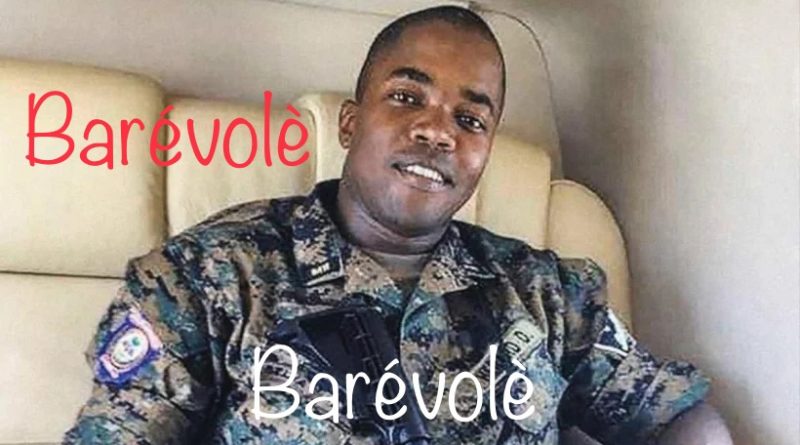
Dimitri Hérard


Barévolè Dimitri Herard sou dosyé assasinyasyon président Jovenel Moise. Traite , traffic zam.

Former Presidential Security Chief Dimitri Hérard Under Scrutiny Amid Political Turmoil

Port-au-Prince, Haiti — Dimitri Hérard, the former head of Haiti’s Presidential Security Unit, remains a central figure in ongoing investigations surrounding the July 2021 assassination of President Jovenel Moïse — a case that continues to cast a long shadow over Haiti’s fragile political landscape.

Hérard, who once oversaw the protection of President Moïse as commander of the General Security Unit of the National Palace (USGPN), has faced repeated questioning by Haitian and international authorities. Allegations have surfaced suggesting possible failures in the chain of command and security lapses on the night of the president’s killing, though Hérard has publicly denied any wrongdoing.

According to officials familiar with the case, investigators have been probing travel records, security communications, and internal command procedures in the days leading up to the assassination. Reports indicate that Hérard traveled to Colombia and the Dominican Republic in the weeks before the attack — trips now under scrutiny as local and international links to Colombian mercenaries become clearer.

Despite the mounting pressure, Hérard and his attorneys have maintained that he had no prior knowledge of the plot and that his unit was outnumbered and overpowered by the armed group that stormed the president’s private residence. “My client performed his duties with professionalism and integrity,” a member of his defense team reportedly told local media. “He should not be made the scapegoat for broader institutional failures.”

The investigation into President Moïse’s murder has drawn participation from U.S., Colombian, and Haitian authorities, though the process has been marred by delays, political interference, and security threats to witnesses and legal officials. More than three years later, Haiti remains without a clear resolution to a crime that plunged the nation further into chaos and deepened public distrust in state institutions.

As Haiti struggles to reestablish stability under a transitional government, many observers view Hérard’s case as emblematic of the opaque power structures and weak oversight that have long plagued the country’s security apparatus.

For now, Dimitri Hérard’s fate — and his role in one of the most dramatic episodes in recent Haitian history — remains in the hands of an unpredictable justice system still seeking to rebuild public confidence.


Would you like me to craft this article in a specific publication style (e.g., BBC, Reuters, Associated Press, or The New York Times)? Each has distinct editorial tones I can replicate.


Dimitri Herard, the head of the General Security Unit of the National Palace (USGPN, by its French acronym), is the subject of a US law enforcement investigation related to arms trafficking in Haiti, according to multiple sources both inside Haiti and the United States. Earlier this week, the president of Haiti was assassinated in what Haitian government officials have claimed was an elite commando raid of the president’s private residence. As head of the palace guard, Herard is one of the individuals most responsible for the safety of the president. The USGPN is responsible for securing both the palace and the president’s private residence.

On Thursday, July 8, the chief government prosecutor in Port-au-Prince requested that Herard present himself for questioning in relation to the assassination of President Jovenel Moïse. A source close to the deceased president, requesting anonymity out of fear for their life, claimed that Moïse was personally aware of the US investigation into Herard, and that Moïse had told them that “the US is taking care of it.” 

Herard, in 2012, was one of a small group of Haitians sent to Ecuador under then-president Michel Martelly to train at the Eloy Alfaro Military Academy. He eventually entered the president’s palace guard and became head of the USGPN in February 2017 after the inauguration of Moïse. Despite Herard’s high-level presence within the USGPN, he also operates a private security company. The practice, while a clear conflict of interest, has become increasingly common among police officers in recent years.

Please follow and like us:

Leave a Reply